
For a long time, in the European craft beer world, innovation has been almost entirely confined to the brewhouse: new styles, increasingly exotic ingredients, unconventional fermentations, alternative hopping products. Everything else – especially packaging – has remained in the background, perceived as a necessary technical step rather than a creative space. But can this final stage of the production process become an integral part of the brewing project? This question lies at the heart of one of the most interesting recent developments in the Italian craft scene: the release of War’s Nitro, an Irish Dry Stout in a widget can with a CO₂–nitrogen mix, developed in close collaboration with Cime Careddu.
A simple idea, anything but simple to execute
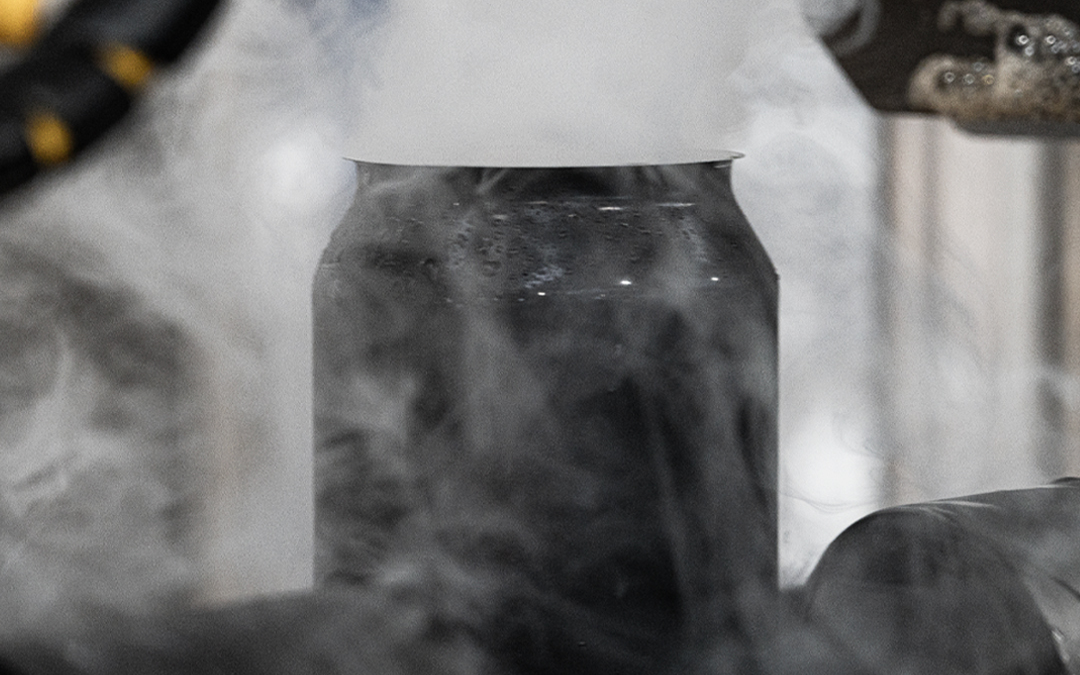


Nitro beers are products in which traditional CO₂ carbonation is partially replaced by nitrogen, a gas with much lower solubility in liquid. Although they are currently receiving considerable attention in Italy, “nitro” beers are by no means new. They have existed for decades and are always defined by recognizable traits: a dense, creamy head, extremely fine carbonation, a smooth mouthfeel, and the “surge” effect—the slow cascading movement in the glass from which the foam forms. The issue is that, historically, this experience has been almost exclusively tied to draft service, requiring dedicated systems and specific taps.
Reproducing that same sensory result in a can is far from straightforward. It’s not enough to simply “replace CO₂ with nitrogen.” What’s needed is a system capable of recreating complex physical dynamics at the moment of opening. This is where the widget comes into play: a small capsule fixed to the bottom of the can which, despite its apparent simplicity, represents one of the most technologically sophisticated objects ever introduced into packaged beer. The most famous example of a widget can is Guinness, widely available in supermarkets. It’s a solution that involves significant technical challenges and, outside of the United States, has never been largely adopted by the craft beer sector. For this reason, War’s Nitro stands as a quite unique case in the European landscape, made possible only through a high-level partnership.


The decisive role of technology
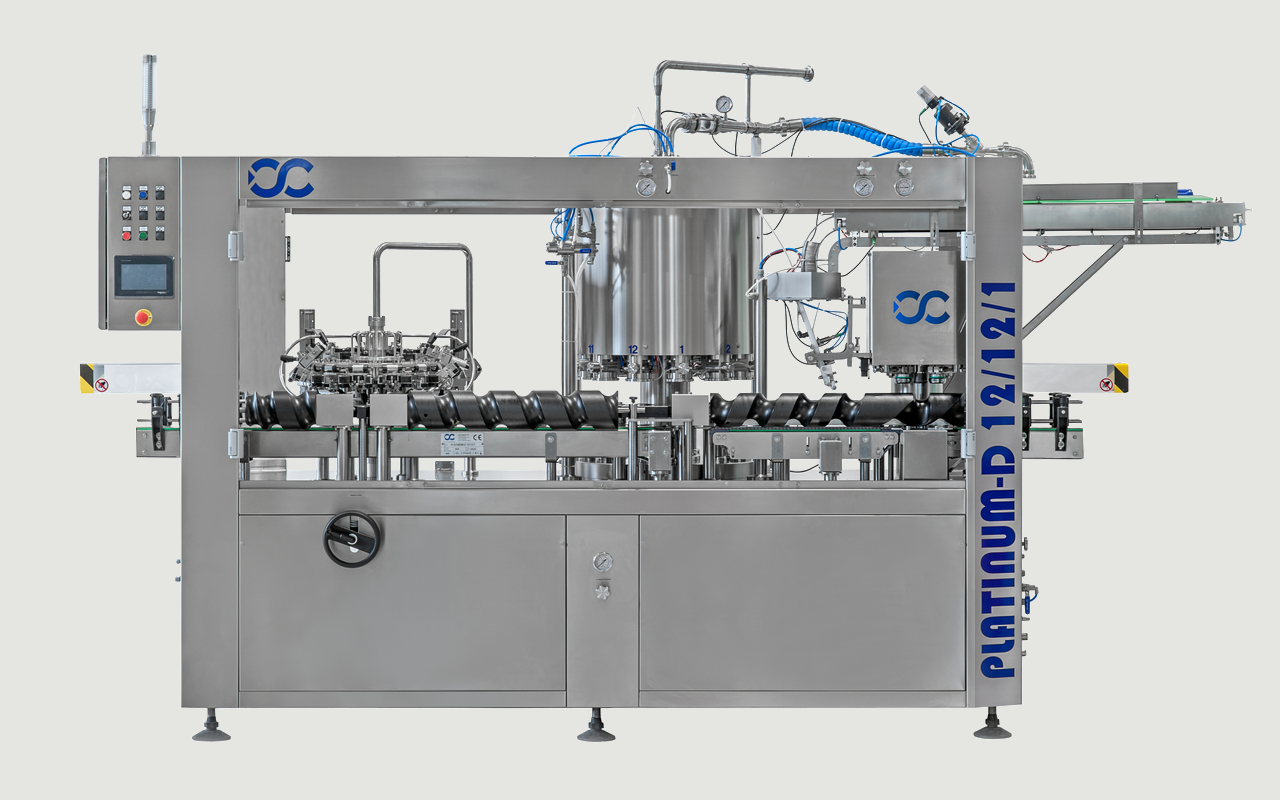
The team at War brewery started with the bold idea of creating a widget can beer. They soon encountered technical obstacles, as the packaging phase required a level of control far beyond that of a traditional canning line. In widget cans, technology is not only needed to prevent oxidation or ensure shelf life, but also to orchestrate a series of extremely delicate steps: the simultaneous management of CO₂, nitrogen gas, and liquid nitrogen; non-standard fill levels; high pressures; and dosing times measured in fractions of a second.


So how does the widget canning process actually work? First, cans are filled with less beer than their nominal capacity, leaving headspace for gas expansion. At this stage, a precisely measured amount of liquid nitrogen is dosed into the remaining space. Once the can is sealed, the nitrogen begins to transition from liquid to gas, gradually increasing internal pressure. During this process, the can is inverted, allowing the expanding gas to enter the widget through an inlet channel and become trapped inside. Upon opening, the sudden drop in pressure causes the nitrogen to be released from the widget through a small opening, rapidly dispersing into the liquid. This controlled release generates the characteristic cascading visual effect and activates the formation of a fine, compact foam, replicating in a can the experience of nitro draft service.
As one might imagine, the entire process is extremely delicate and requires an exceptional level of precision. War was able to achieve this thanks to the contribution of Cime Careddu, which supported the brewery through a fascinating experimental journey. The company provided War with a prototype of a new machine, the Platinum-D, capable of meeting several essential requirements: electronic filling, multi-gas management (with separate inputs for CO₂, gaseous nitrogen, and liquid nitrogen), high-pressure purging, and highly precise liquid nitrogen dosing. The project involved testing, adjustments, mistakes, and refinements – a process that brought together mechanical engineers, software specialists, and line operators from Cime Careddu, in continuous dialogue with the brewery. The result is a solution that remains a rare example in the European craft market.
Packaging as part of the recipe
Beyond being the result of significant technological advancement, War’s innovation also introduces a compelling shift in perspective. In a nitro beer packaged with a widget, the can is no longer a passive container. It becomes an active tool that directly contributes to shaping the drinking experience and even the formulation of the recipe itself. The Lombardy-based brewery opted for a classic grist composition (70% Extra Pale malt, 20% flaked raw barley, and 10% roasted barley) to create a dry, lean beer with clear but never aggressive roasted notes, and a structure suited to enhancing the smoothness typical of nitro dispensing.
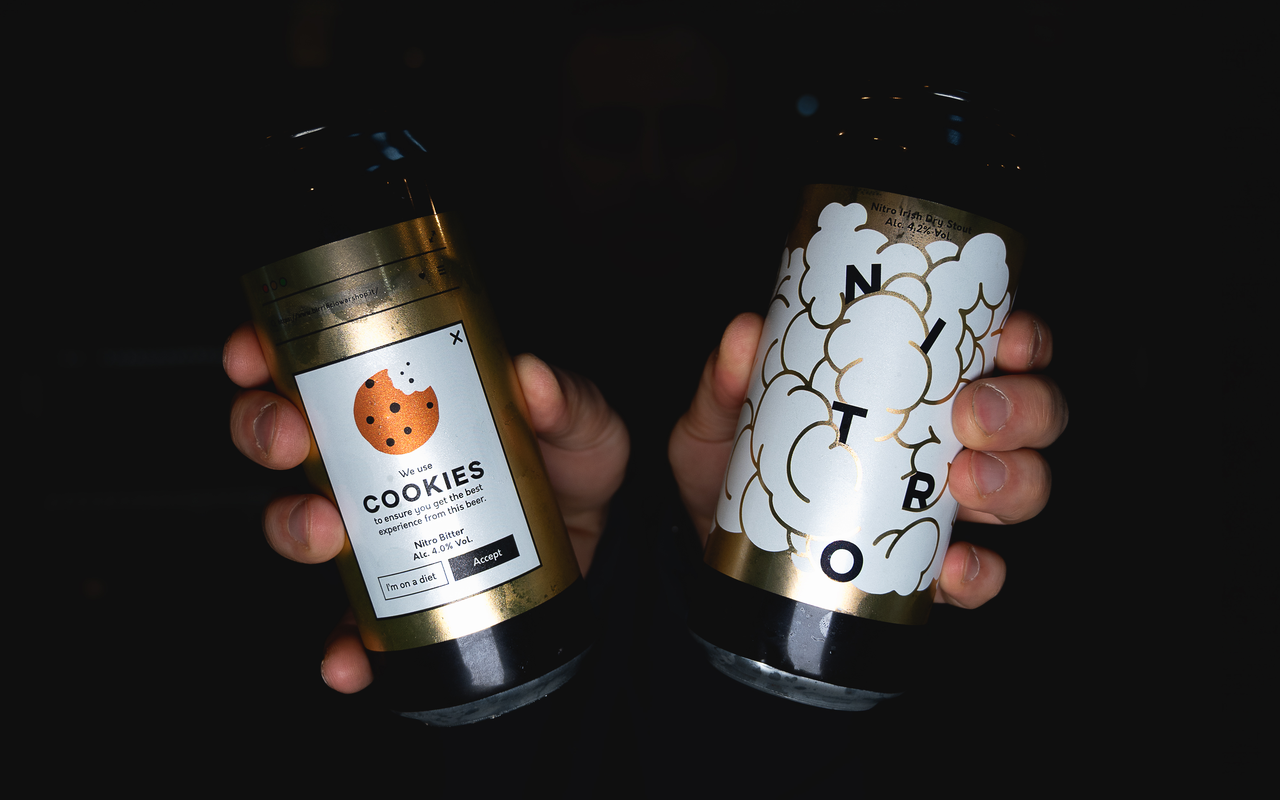
It is no coincidence that the recipe was designed from the outset to work in synergy with the packaging, since in a nitro beer the aromatic and flavor profile must interact with a very specific texture, defined by extremely fine carbonation and a creamy mouthfeel. These elements can also be applied to other styles: after the Nitro, War used the same method for a special version of Cookies, its Bitter. The approach can extend to other styles as well, from British classics like Golden Ale and Strong Ale to more modern styles such as New England IPA, enhancing their velvety character.
Conclusion
War’s Nitro is not just a new product, but a case study in how technology, vision, and industrial collaboration can generate tangible innovation. It demonstrates that even in the craft sector – often associated with a romantic narrative of production and artisanal solutions – dialogue with technology providers can become a strategic driver of growth. Provided, of course, that breweries partner with reliable, skilled, and open-minded companies, sharing the values that have always defined Italian and international craft beer.
